文藻小螺絲釘 WUTH
義大醫院新進志工訓練 New Volunteers Training at E-Da Hospital
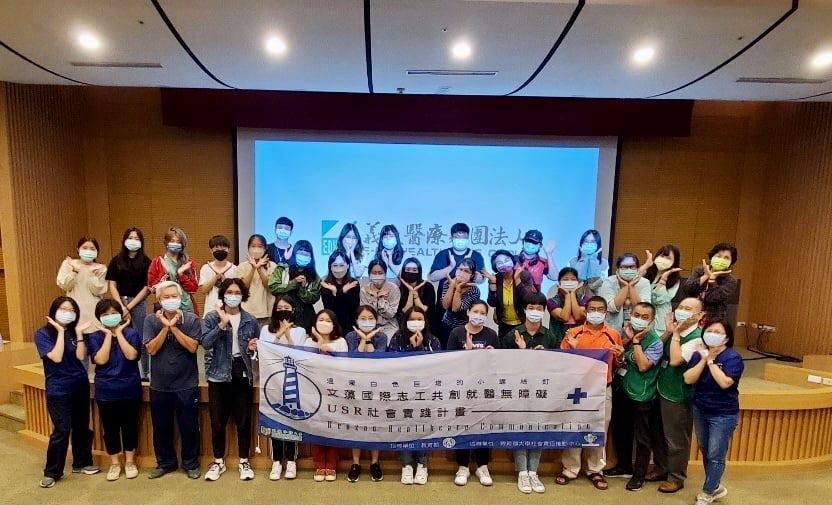
(2021/10/16 張芸嘉、莊少萱撰稿,季慕華老師譯) 2021年10月16日,文藻的小螺絲釘又開始接受義大醫院的志工訓練,從早上九點開始到下午四點結束,主要是以講座的形式來帶領新進志工了解義大醫院,上午場主要是在介紹志工們會接觸到的單位,提到的有醫事處、護理部門診、急診、安寧醫療照護以及人力資源室。醫事處是在介紹醫事一課組織工作內容說明;護理部門診介紹工作內容說明以及現場示範如何正確使用輪椅;急診是在介紹工作內容及環境,講師還有分享一些只在急診才會碰到的突發事件;安寧醫療照護介紹其安寧療護的內涵及目的;人力資源室則是在介紹整個醫院的院長、主任等高階主管,因為在志工服務過程中或許會碰見他們。大致介紹完後就是醫院巡禮的部分,將在場所有的新進志工分成兩隊並各由兩位資深志工帶領前往醫院實地走訪一遍,沿途中資深志工們會親切地告知你各處室門診的確切位置、各樓層的志工駐守點在哪裡、志工辦公室的位置以及哪些電梯不用刷卡就能搭乘。下午場的內容是著重在志工隊的介紹、器官捐贈宣導、醫院服務禮儀與服務倫理以及資深志工經驗分享。志工隊介紹包含了服務範圍(門診、急診、病房、社區、防疫服務等)、服務規定、正式志工福利和緊急應變及消防;器官捐贈宣導會帶我們了解器官捐贈的種類、可移植的器官或組織、是否有年齡限制、植物人是否腦死且能否捐贈器官、哪些疾病影響器官捐贈等;醫院服務禮儀與服務倫理則是在講解我們應該注意語氣、儀態、心態及給人第一印象,倫理範圍包括了服務對象、志工本身、志工夥伴、社會大眾、家庭成員和運用單位。 我們是第一次參與醫院的志工訓練,雖然這次是新進志工訓練講座,而不是實際跟其他志工們一起在醫院裡服務民眾,但我們還是學到了很多東西,像是在不同單位都有各種不同的工作,例如在門診中,需要協助服務台、大門口協助推輪椅、協助年長者上手扶梯、中醫養生茶水推車、日照陶笛教學、大廳音樂演奏;在急診中,需要推床協助、批價領藥、急診庶務協助、協助買餐送餐;在病房中,則是有安寧病房手工藝服務、茶水推車服務、精油芳療志工、兒科病房捏捏樂活動;除此之外還有防疫服務,志工們會製作防護面罩、大門協助手部消毒以及防疫宣導等。在講座進行中,印象最深刻的是廖俊芳老師分享她的親身經歷,某次獨自一人載母親前往醫院掛急診,因為停車場太遠而分身乏術時,是當時在大門的志工協助她母親坐輪椅,這幫了焦急的老師一個大忙。還有我們剛進醫院時也是一頭霧水,完全搞不清楚方向,是當時在志工點值班的阿姨,親切地告訴我們舉辦講座的確切位置以及該如何前往。志工們的工作看似微不足道,卻如同螺絲釘是不可或缺的,他們能讓繁忙的醫護人員們減輕一些負擔,也能夠幫助到任何有困難的民眾。希望接下來的服務工作,文藻的小螺絲釘們可以從中獲得寶貴的經驗,並有效實踐利他精神散發光和熱!
(2021/10/16 Written by Corrine Zhang、Skye Chuang ,translated by Yolanda Chi) On Oct. 16, 2021, WHC-USR volunteers received training for new volunteers at E-Da Hospital, starting from 9 am to 4 pm in a series of lectures to help volunteers to gain a general picture of the hospital and their mission. The morning sessions introduced the units with which volunteers would be involved, such as the Departments of Medical Affairs, Nursing Service for Outpatients, Emergency, Hospice Care, and Human Resources. The Department of Medical Affairs introduced the organization of the hospital and related work. The Nursing Service for Outpatients explained the details of work and demonstrated the correct way of using the wheelchairs. In addition to work and the environment at the Emergency, the lecturer shared some special stories that could only happened there. The Hospice Care offered the aims and work scope of hospice care. Human Resources gave briefing on the top hospital administrators, such as the Hospital Superintendent, directors and other executives. After the introduction, new volunteers toured around the hospital in two groups led by two senior volunteers, who kindly showed the exact locations of the units and the volunteer station on every floor, the volunteers’ office, and the elevators respectively for visitors and authorized personnel. In the afternoon, the lectures mainly focused on the mission of the Volunteer Team, including promotion for organ donation, hospital service etiquette, work ethics and experience of the senior volunteers. New volunteers learned about different areas of work at the outpatient clinics, emergency, wards, local communities and pandemic prevention service, as well as the regulations for service, benefits for certified volunteers, related measures for emergency and fire prevention. The talk on organ donation helped the volunteers to understand the types of donation, organs and tissues for transplant, age limitation, and the controversies over the rights of the brain-dead patients and the diseases that may affect organ donation. On topics of hospital etiquette and work ethics, volunteers were reminded of the polite tones, manners, attitudes, and first impression given to people, while ethics involved people such as the patients, volunteers and their partners, the general public, family members and the recruiting institutes. This was the first time for new volunteers to attend hospital training lectures. Although they were not able to participate in the service yet, they had learned plenty of knowledge and skills, especially the types of work at different units. For example, at the Outpatient Hall, volunteers are expected to assist the service desk, to help push the wheelchairs, to help the seniors to step on the escalators safely, to serve the herbal tea on a trolley, and to help with ocarina teaching at the day care area or the music performance. At the emergency room, volunteers need to help push the beds, to go to the cashier and pharmacy, to help with general affairs, and even to buy and deliver meals. In the wards, the service varies; at the hospice care ward, there are volunteers that serve handicrafts, herbal tea, and aroma therapy, while at the children’s ward, there may be clay modeling or other activities. At the pandemic prevention service area, volunteers make facial masks and covers, help with hands sterilization and promotion for pandemic prevention. In the sharing, volunteers were impressed by Prof. Melody Liao’s own story. Once she alone took her mother to the emergency room, and as she had to park her car some distance away, the volunteer helped her mother to a wheelchair and cared for her until Prof. Liao returned. It was indeed a helping hand in need! When these new volunteers arrived at the hospital for the first time, they felt the same; they were lost and fortunately the senior volunteers on duty told them smilingly the exact training venue and showed them the directions. The service might seem trivial but indispensable as the tiny screws in a big machine. Volunteers may help reduce the workload of the medical personnel and assist the public in need of help. We hope in their service that follows the training, volunteers as the tiny screws of WHC-USR will gain precious experience and fulfil altruism with their heat and light.