文藻小螺絲釘 WUTH
李偉強部主任醫師演講-疫情下的國際醫療 (林建勳撰文;季慕華翻譯) Lecture by Dr. Wui-Chiang Lee: International Medical Care under Covid-19 Pandemic (written by Prof. Chien-Hsuin Lin;translated by Yolanda)
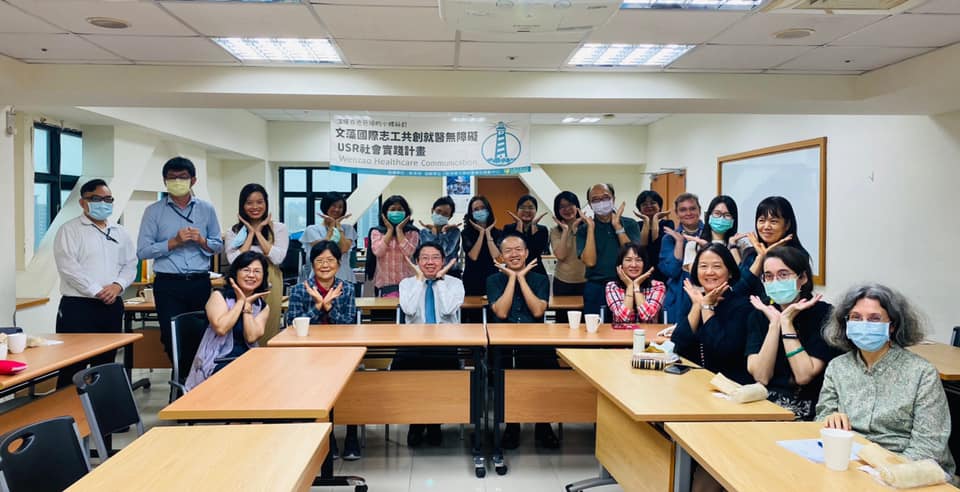
十一月十一日下午,假文藻至善樓1307會議室,文藻WHC-USR團隊邀請了台北榮民總醫院醫務企管部主任,也是前衛福部司長的李偉強醫師,蒞校演講。李醫師不但有豐富的國際醫療的經驗,也能夠從宏觀的視野,深入淺出的介紹國際醫療的現況以及我國的處境。由於李醫師的盛名,移民署南區大隊謝文忠大隊長,以及高榮醫院沈凡筠和長庚醫院的吳友仁國際長、陳志弘主任、趙健宏專員及薛堯中主辦也都到場聆聽。文藻陳美華校長及王立勳研發長也到場,竭誠歡迎多位嘉賓。 (Afternoon, November 11, 2020 at Conference Room 1307, Zhishan Hall) WHC-USR invited Dr. Wui-Chiang Lee, Director of the Department of Medical Affairs and Planning, Taipei Veterans General Hospital and also a former director of Ministry of Health and Welfare, to Wenzao University to give an insightful lecture. His rich experience in international medical services and a macro vision opened up a brand new perspective to the status quo of international medical care and Taiwan’s positioning. His reputed expertise attracted numerous guests to the venue, including Captain Wen-Chung Hsieh of Southern Taiwan Administration Corps, National Immigration Agency as well as directors and doctors in related fields from Kaohsiung Veterans General Hospital and Kaohsiung Chang Gung Memorial Hospital. At the venue, President Margaret Mei-hua Chen and Dean Richard Wang of Office of Research and Development arrived to greet the guests.
李醫師以為在目前新冠疫情肆虐的情況下,各處機場都空無一人,全歐就關閉了四百多座機場。不僅交通陷入困境,各國也都將醫療資源投入新冠病毒的防疫和救治,各類型的國際醫療幾乎都處於暫停的狀況,這時候正是我們好好思索台灣國際醫療的方向及未來的時候。李醫師首先提到,台灣目前在國際醫療上,較認同志工及國際的義診,但對於把國際醫療當成産業較不認同。事實上,具有良好的國際醫療産業,才能使國際醫療的工作長長久久,若只是提倡義務型的醫療,不但會使得國際醫療的品質無法得到提升,同時也阻礙了國際醫療的發展。 To begin with, the disastrous plight brought by the Covid-19 pandemic can be easily observed at the airports, most of which remain void, with the closure of more than 400 airports in Europe already. Not only global transportation but almost all international medical services have been suspended as well due to a reshuffle and remobilization of medical resources for pandemic prevention and treatment in every nation. It is the right time for Taiwan to reconsider its development and future for international medical services. According to Dr. Lee, the first change will be the expectation of the public for international medical services, in which volunteering and charity treatment have been highly recognized by the public for years rather than business development. In fact, only when the medical industry thrives as a global business on a sound basis can international medical services become sustainable. With volunteering or charity as the sole feature, the development will inevitably lead to the lack of technological advancement in quality and insufficiency for a comprehensive development of international medical services.
台灣的防疫做得很好,全球一百九十多個國家中,台灣疫情的排名在一百八十多名,我國擁有優良的醫療人員與先進的設備。同時台灣的電子業也是無雙的強項,若能與國際醫療結合,在跨入5G的世代之後,有關遠距看診、開藥乃至手術都不成問題,會為國內的醫療産業帶來革命性的變化。 Taiwan has done a good job on pandemic prevention; of approximately 190 nations, Taiwan is listed around 180 with very low rate for infection, benefiting greatly from excellent medical personnel and advanced facilities. Assisted by another peerless strength in Taiwan’s electronic industry, medical services, if integrated together after the 5G era, will be able to transform revolutionarily in such respects as online diagnosis, prescription, and telesurgery.
但是在國際醫療的産業上,我國沒有較高層的統整單位來進行整合。産業是經濟部管轄,醫療是衛福部管轄,交通、觀光又屬交通部,各部會整合困難,反觀其他做得好的國家都是一個單位、一條鞭的執行到底,我們還有很大的改革空間。 李醫師也指出,東南亞諸國對台灣的醫療有著很大的需求,政府的南向政策是對的,但我們自已的觀念及經營模式都要改變革新,例如我們可以使用「前店後廠」的方式,將駐點看診置於前方繁華城市,但實際醫療是可以建立SOP另行安排。這可以大大節省成本支出,同時創造出好的醫療品質。 However, above the international medical services and industry, an institute of a higher level in Taiwan to integrate resources has not yet come in view. Currently, manufacturing is under the governance of Ministry of Economic Affairs, medical care under Ministry of Health and Welfare, transportation and tourism under Ministry of Transportation and Communications, with barriers in between. In contrast, other nations may establish a single unit to govern and execute a series of measures, which is the big gap for Taiwan to overcome. Dr. Lee also points out that Southeast Asian countries have a great demand for Taiwan’s medical services. Taiwan’s “Southbound Policy” is moving on the right track, but it is we Taiwanese who have to make a change in both the concept and the operation mode. For example, the front-shop-back-factory model will enable the industry to station front-desk services in metropolitan areas, while the actual treatment can be administered elsewhere properly through standard operating procedures to cut down the cost and to create excellent medical care quality.
李醫師對國內醫療産業的興衰掛念甚深,諄諄之意溢於言表,令人感動。 Dr. Lee’s inspiring speech revealed his sincere concerns over the sustainability of the medical care industry, leaving the audience with superb impression.